


Karli Health · Miami, FL
Stem Cell Therapy for Arthritis and Joint Pain in Miami
Karli Health is led by Harvard-trained physician, researcher and published author David Karli, MD, MBA.
Physician-led regenerative orthopedic care for arthritis, joint pain, cartilage-related degeneration, and mobility loss, using PRP, Bone Marrow Cell Concentrate, Umbilical Cord-Derived Cells, and MUSE Cell Therapy when clinically appropriate.
Can Stem Cell Therapy Help Arthritis?
Yes. Arthritis is the most common reason patients come to Karli Health, and our database includes thousands of patients treated for arthritis in many different joints. Their tracked outcomes have shown significant and sustained pain relief and improvements in function after stem cell treatment.
That database has also allowed us to research customization and optimal dosing protocols for different patients and problems, which provide the best chance for a successful treatment outcome.
We continue to explore different types of stem cell therapies comparatively in an effort to address the five “Ws” – what works, when, where, why and for whom.
What it will not do is work the same way for everyone, and it is not the right answer for every joint. Whether it is right for you depends on your diagnosis, your imaging and the condition of the joint, which is why every patient is evaluated before any treatment is discussed.
Arthritis and Joint Pain Are Not One-Size-Fits-All
Arthritis is not one condition, and it does not behave the same way in every joint. The knee, hip, shoulder and spine differ in how much load they carry, how many structures can generate pain, what shows up on imaging, and what a treatment has to reach in order to work. That is why the evaluation comes before any discussion of treatment.
Knee arthritis
Knee arthritis is one of the two most common problems we treat. Treatment can range from a simple injection into the joint to a more targeted injection into a torn meniscus, ligament or tendon. Every injection is guided by fluoroscopy (X-ray) or ultrasound to confirm accurate placement and maximize the likelihood of success.
Hip arthritis
Hip arthritis has historically been more challenging to manage consistently in regenerative medicine. Hip joints are high-load, highly mobile joints that endure significant impact and stress, and hip pain often involves more than one source – degenerative cartilage, labral tears, and at times associated soft tissue problems like bursitis and tendonitis. Careful, accurate placement under guidance matters here more than almost anywhere else.
Spine and back pain
The spine has the greatest complexity of all, with bones, discs, joints, nerves and soft tissues all working within a column that must be both stable and mobile. Any or all of those tissues can become a pain generator, so a detailed and accurate workup and diagnosis becomes critical. That complexity is also why advanced physician training is necessary to deliver cells safely and precisely under fluoroscopic guidance.
Shoulder arthritis
The shoulder carries extra complexity. Beyond the ball-and-socket joint itself, called the glenohumeral joint, the rotator cuff tendons and stabilizing structures, including the labrum, commonly contribute to pain. Shoulder treatments often involve multiple injections to address any tissue that may be part of the pain source. Rotator cuff tears are extremely common and have responded exceptionally well to ultrasound-guided injections.
Small joint arthritis
Arthritis in the hand, wrist, elbow, foot or ankle can make everyday movement painful. Dr. David Karli evaluates the joint and discusses whether treatment can help you feel and move better.
We also evaluate cartilage-related degeneration, chronic joint inflammation and loss of mobility, which frequently accompany arthritis in any of these areas.
Regenerative Treatment Options for Arthritis and Joint Pain
The right regenerative treatment for arthritis depends on your diagnosis, not on a menu. Which option is appropriate depends on the tissue being treated, the severity of the condition, what has already been tried, and your goals. That is why the therapy is selected after the evaluation, not before it.
PRP harnesses the contents of platelets from your own venous blood, which are released when injected and coordinate healing after injury. Contrary to how it is often described, there are no stem cells in PRP. At Karli Health, PRP is prepared in our on-site laboratory and can be customized to target a specific platelet concentration or total platelet dose.
BMC contains platelets like PRP, but also numerous populations of progenitor (stem) cells stored near the blood vessels inside the bone marrow cavity. In BMC treatments there is a more complex coordination between the contents of the platelets working with the stem cells to stimulate and support healing and repair. Our database has recorded both as effective in arthritis, with BMC showing much greater potential for sustained, often multi-year benefit.
The umbilical cord is rich with mesenchymal stem cells, which can be isolated after a healthy birth and cultured under meticulous sterile conditions in certified laboratories in accordance with Florida stem cell law. The majority of donor stem cell treatments globally have used cells isolated from umbilical cord and the Wharton’s jelly tissue within it. These donor cells are generally effective at evading the recipient’s immune system, meaning the body is unlikely to reject them, and have a good safety record over more than 20 years of use.
MUSE cells are a rare subpopulation, fewer than 3%, of cultured donor stem cells that have demonstrated an ability to withstand stressful conditions in culture. Research to date has reported them to be safe, unlikely to be rejected by the body, and anti-inflammatory, with the potential to distribute efficiently through the body and home to signals released from damaged tissue. They are also smaller than other mesenchymal stem cells, which may allow them to pass through the lungs and reach the rest of the body when given intravenously – something other stem cells either cannot do or do not do as well. Most stem cells given this way get caught in the lungs, an obstacle known as the “first pass effect”.
For arthritis and joint pain, Karli Health generally views exosomes as a supportive add-on rather than a stand-alone treatment. We may consider adding exosomes to stem cell therapies when the goal is to support the signals between cells and calm inflammation.
The Karli Standard: Measured, Tracked and Compared
For decades, most regenerative medicine has been delivered without knowing what was actually administered.
Dr. Karli built the measurement system long before he built Karli Health. He developed it during his tenure at the Steadman Clinic, where he and his partners were expected to deliver world-class care to professional athletes and get them back on the field. There was no room for error, and none for “good enough.” He founded Greyledge Technologies in 2010 to bring that same precision into everyday practice.
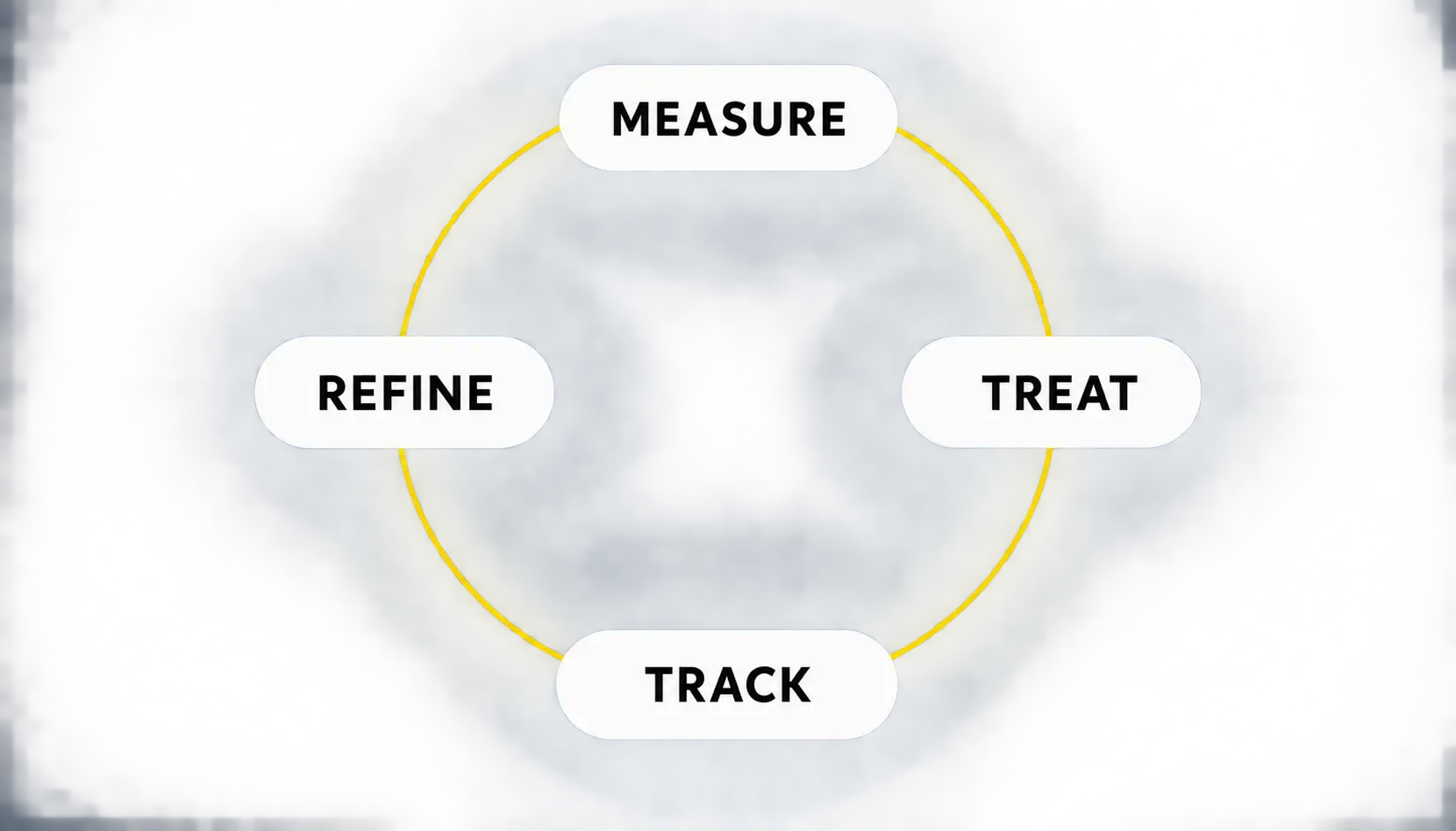
The Karli Standard starts with knowing the dose, then tracking how that dose relates to your long-term outcome. As that data builds, dosing becomes more clearly defined and protocols can be refined.
A measured dose, not an estimate
When we use your own cells, everything is prepared and measured in our on-site laboratory. PRP can be customized to a specific platelet concentration or total platelet dose. BMC is measured after processing to confirm the proper dose for the problem being treated. This ability to measure, adjust and confirm the final product in real time is highly specialized and not customary in most regenerative medicine practices.
We obtain donor-derived stem cells from a certified laboratory in Texas or Florida. Because our quality control standards are higher than what is customary in this field, we do not take the laboratory’s cell count at face value. We re-measure it ourselves, in our own facility’s lab, at the time of injection.
We confirm the cells are alive before we use them
Donor cells arrive frozen, and how they are stored and thawed affects how many are still alive when they reach your joint. So we control every step. We buy in small batches rather than keeping large amounts in storage, and every batch is stored and thawed via a strict, standardized protocol.
We release each batch by running the cells through a mini flow cytometer, right in our facility’s lab. A flow cytometer is a small machine that sends cells past a beam of light one at a time and counts how many of them are alive. It takes a few minutes. It means the dose you receive is a number we confirmed at the time of injection, not a number printed on a label weeks earlier.
We check in with you, on a schedule
We follow up at 1, 3, 6, 12 and 24 months and beyond, asking the same set of questions used to score knee, hip, shoulder and back function – KOOS and HOOS for knees and hips, SPADI and DASH for shoulders and arms, and the Oswestry index for the back. These are the standard questionnaires used in orthopedic studies, so your progress gets an actual score that can be tracked over time, instead of a general sense of whether things feel better.
Your answers go into the Greyledge Data Cloud, which, as of August 2026, had tracked more than 8,000 regenerative treatments across Karli Health and other U.S. practices using Greyledge technology. That number grows every day as new treatments are added. Some patients have been followed for more than two years, and we are still following them.
The comparison no one else is running
Florida’s donor cell law took effect July 1, 2025. Physicians in most other states may only use a patient’s own cells, which is why the great majority of treatments in the database are autologous – meaning they come from the patient’s own body. Florida law now allows us to use both a patient’s own cells and donor-derived stem cells, and we apply measured doses and the same follow-up questions to each. That makes a direct comparison between the two approaches possible.
Almost every patient asks us the same question: should I use my own cells, or donor cells? Until now, nobody could answer that with real data, because almost no practice has been permitted to use both and measure both. We can. Our experience with donor-derived stem cells is still early, and this is real-world data rather than a formal clinical trial, but our data is more than what most facilities have, and it is growing significantly as time passes.
How Dr. Karli Determines Candidacy
Every patient is evaluated before any treatment is discussed. The diagnosis drives the therapy, not the other way around.
How Dr. Karli Identifies the Source of Your Pain
Orthopedic pain can originate from one source or several sources at the same time. An accurate diagnosis is a critical part of achieving a successful outcome with cell therapy. The process begins with a thorough screening by our team, followed by a detailed physician evaluation that includes a physical examination and review of previous imaging, laboratory results and biomarker testing.
Often, this process is enough to identify the most likely source or sources of pain. When needed, diagnostic injections may be used to temporarily numb a specific tissue or nerve and help determine whether it is contributing to the pain.
The more precisely the source of pain can be identified, the more accurately treatment can be targeted. Sometimes more than one tissue must be addressed because multiple structures are contributing to the problem. We work very hard to minimize the need for educated guesses when considering stem cell therapies. The best outcomes begin with the right diagnosis.
Which Imaging Studies Are Most Useful for Arthritis and Joint Pain?
For many orthopedic conditions, MRI is the gold-standard imaging study for visualizing soft tissues and helping identify the source of pain. It allows us to evaluate anatomy and tissue health, including inflammation, scarring and whether a problem appears acute or chronic.
X-rays and CT scans answer different questions. We may use them when evaluating possible joint instability or when greater detail about bone health is needed. If you do not already have an MRI, existing X-rays can still provide useful information. Additional imaging can be ordered if the evaluation shows that it is necessary.
Less commonly, a bone scan or PET scan may be useful to evaluate metabolic activity and the state of healing, including whether healing is ongoing, incomplete or absent. DEXA scanning can also provide detailed information about bone density and body composition, including muscle mass and fat distribution. This information may be valuable for both general health and the successful management of orthopedic conditions.
The Questions Dr. Karli Will Ask You
- What do you hope to achieve with stem cell therapy?
- How much does your problem limit your quality of life?
- What would you like to do in your life that you cannot currently do because of your problem?
- What treatments have been tried to date for the problem?
- If a prior cell therapy was unsuccessful, did your treating physician know your cellular dose, guide the injection and track patient outcomes?
- Have you had recent blood panels or biomarker testing?
- Is the affected body part limited by pain or by mechanical restriction? In other words, are we dealing with a symptomatic problem, a structural problem or both?
What Factors May Improve the Likelihood of a Successful Outcome?
Beyond the diagnosis and condition of the joint, Dr. Karli considers several patient-specific factors when estimating the likelihood of a successful outcome:
- Being motivated and informed, with clear, realistic goals and an understanding of what cell therapies can and cannot do.
- Seeking care before degeneration and chronic damage become excessively severe. The severity of degeneration can vary across different grades.
- Improving and maintaining a healthy, active lifestyle after biologic treatment, including good nutrition, regular exercise and adequate sleep.
- Evaluating and improving relevant health factors through biomarker testing when appropriate, including inflammation, metabolic health, nutrition and hormonal status.
- Following post-procedure restrictions, rehabilitation and aftercare instructions carefully.
- Being patient with the healing process and understanding that cell therapies may take several months to reach their full effect. The body did not become degenerative overnight, so improvement and healing will not happen overnight either.
We confirm the cells are alive before we use them
Factors that may reduce the likelihood of a successful or sustained outcome include:
- Expecting a guaranteed result or complete reversal of advanced structural damage.
- Waiting until degeneration or structural damage has become severe and chronic, then failing to recognize that a 50% improvement may still represent a meaningful success.
- Poor nutrition, inadequate exercise, poor sleep or a consistently sedentary lifestyle.
- Poor metabolic health, including obesity or poorly controlled chronic inflammation.
- Untreated hormonal, nutritional or other health issues that may interfere with recovery.
- Not following post-treatment restrictions, rehabilitation or aftercare instructions.
When Is Surgery a Better Option Than Stem Cell Therapy?
There are situations in which surgery is necessary or may offer a better option than nonsurgical care or stem cell therapy. Advanced structural problems cannot always be corrected or reversed with a biologic treatment. In some cases, however, regenerative treatment may still help manage the condition and support function even when it cannot repair the underlying structural damage.
When surgery is the better path, regenerative medicine may still play a supporting role. Greyledge Technologies and others in the field are increasingly working with orthopedic surgeons to evaluate the use of cell therapies during or around surgery, when clinically appropriate, to support surgical repair, healing and recovery.
As part of a comprehensive evaluation, we consider all reasonable options: traditional nonsurgical care, surgery and regenerative treatment. Together we weigh the potential benefits, limitations and uncertainties of each approach.
Evidence guides the discussion whenever possible. That includes published research, Karli Health patient outcomes tracked through the Greyledge Data Cloud, observations from the broader field and a clear explanation of what is still unknown. This thorough, transparent conversation helps each patient make a thoughtful decision about the personal and financial investment involved.
What Regenerative Medicine Can and Cannot Promise
Regenerative medicine is an option for properly selected patients seeking an alternative or an addition to conventional care. What these treatments do is help support the body’s own healing process.
When a problem is caught early enough, before degeneration and chronicity become severe, that support can extend to a genuinely regenerative process.
What is misleading is the blanket claim that stem cells will completely “regenerate” cartilage. That is a stretch, and it is not where science stands today.
We draw boundaries plainly: we cannot solve or reverse advanced structural problems with chemical solutions, i.e., stem cells or other Regenerative Medicine injectates. What we can often do is successfully manage structural problems with a chemical solution.
That single distinction is the basis of every candidacy decision made here. Managing a joint is realistic. Completely rebuilding one is not. There is an important caveat, however. If we catch the problem early enough, the body can accelerate a healing cascade and may slightly remodel some cartilage-like tissue. However, studies clearly show that severely damaged and degenerative cartilage cannot be regrown or fully “regenerated.”
What we can offer: an accurate diagnosis before any treatment is chosen; a measured, documented dose rather than an estimate; placement guided by fluoroscopy or ultrasound; outcomes tracked with the same scoring systems used in orthopedic research; and an honest answer about whether you are a good candidate, including when the answer is no.
What we will not tell you: that it works for everyone, that stem cells will completely regenerate cartilage, that you are guaranteed to avoid surgery, or that any result is certain or guaranteed. We have a realistic approach, and we strive to help our patients have the same.
Every discussion weighs all the options: traditional nonsurgical care, surgery and regenerative treatment. We review what we know from published research, our own outcomes data, what is observed anecdotally in the field and what we still do not know. That level of thorough and transparent discussion is what allows you to make an informed decision about your health investment, both personal and financial.
Frequently Asked Questions
There is no single stem cell treatment that is best for every patient with arthritis. The two primary options we consider are Bone Marrow Cell Concentrate (BMC), which concentrates a patient’s own cells and platelets from bone marrow blood, and cultured mesenchymal stem cells (MSCs) isolated after a healthy birth from Wharton’s jelly within the umbilical cord.
BMC contains a patient’s own MSCs along with other helpful cells and platelets. Umbilical cord-derived MSCs are grown in a laboratory to produce more cells. In select cases, we may also consider MUSE cells, a small subpopulation of cultured donor-derived MSCs administered through targeted injection, intravenous infusion or both.
We have more long-term data on a patient’s own cells because they have been legally available for much longer. Through the Greyledge Data Cloud, we continue to collect and compare outcomes from donor-derived cells in similar patient populations.
Both primary approaches have produced successful results, but evidence does not yet show that one is universally better. We partner with each patient to choose the most appropriate option based on diagnosis, joint condition, medical history, goals and preferences.
Both PRP and stem cell therapy can be effective for arthritis. Stem cell therapy is a broader category that includes BMC and cultured donor-derived options, such as Umbilical Cord MSCs and MUSE cells.
PRP has more than 20 years of reported data, and BMC has more than a decade of tracked outcomes. Donor-derived cell therapies are newer and still emerging, but all three approaches have reported patient improvements.
The Greyledge Data Cloud has shown that PRP can be effective in the right application, but its results do not appear to last as long as stem cell results. We are diligently collecting head-to-head data comparing a patient’s own cells with donor-derived cells to determine whether either performs better for specific applications. Its AI-assisted outcomes tracking is central to how we evaluate treatment options, counsel patients and personalize care. It is one of the features that sets the Karli Health approach apart.
Stem cell therapies add living cells with different repair and remodeling functions. We believe these functions help explain why stem cell results appear to last longer than PRP and why cell therapies may offer a different healing capacity for arthritis. Our tracked outcomes support this distinction.
This is a very good question, and we hear that patients are told very different things depending on whom they speak with. No stem cell therapy is FDA approved for arthritis; however, not every stem cell therapy requires FDA approval. This is where much of the confusion lies.
Under FDA guidelines, stem cells taken from your own body that are not grown or otherwise altered do not require FDA approval. When handled this way, they are considered compliant for use.
Donor-derived stem cells are not FDA approved. Because the FDA considers them biological drugs, they fall under different federal requirements and generally require approval for use.
Beginning in 2024, individual states began passing laws allowing their regulated use under strict requirements that physicians must follow. Florida’s law took effect in July 2025. As of September 2026, five states allow the regulated use of donor-derived cells. In Florida, permitted treatment areas include orthopedic conditions, pain management and wound care, provided physicians follow the state’s strict requirements.
We understand that this is confusing and that physicians and companies may explain the laws differently. We continue to monitor the requirements and follow them carefully because compliant, safe treatment is what matters most for our patients.
Cost can vary based on the diagnosis, its severity, the number of joints treated and the number of cells administered. Each patient is unique, and all factors are considered when determining the treatment approach best suited to you and your condition.
Typical costs range from $6,000 to $12,000 for joint treatments and from $10,000 to $20,000 for spine treatments, depending on complexity. Additional considerations include anesthesia, if applicable or desired, and whether more than one treatment is expected. In some cases, when more advanced arthritis is associated with systemic inflammation, intravenous stem cells may be considered at an additional cost.
For patients who want to explore the research behind some of the regenerative orthopedic approaches discussed throughout this site, we have included selected published studies below. Research continues to evolve, and individual studies do not predict how any one patient will respond to treatment.
Hip
Hernigou P, Centeno CJ, Berger DR, et al. International Orthopaedics. 2026.
A 15-year matched-cohort study of 434 hips evaluated intraosseous Bone Marrow Concentrate delivered into the femoral head under fluoroscopic guidance. The study reported lower progression to total hip replacement in the treated cohort compared with matched conservative care and identified a relationship between cellular dose and outcome.
Intraosseous Bone Marrow Concentrate for Hip Osteoarthritis: A Case Series
Cox RL, Tseng J, Williams C. Cureus. 2025.
This case series evaluated fluoroscopically guided intraosseous BMC for hip osteoarthritis, including treatment directed to subchondral bone pathology. The authors reported improvements in pain and function, while noting the small study size and need for further research.
Knee
Hernigou P, Bouthors C, Bastard C, et al. International Orthopaedics. 2021.
This randomized study followed 120 knees in 60 patients with bilateral knee osteoarthritis. One knee received BMC into the subchondral bone while the other received the same cellular treatment intra-articularly. At long-term follow-up, the subchondral-treated knees had a lower rate of progression to total knee replacement.
Spine
Pettine KA, Murphy MB, Suzuki RK, Sand TT. Stem Cells. 2015.
This prospective pilot study evaluated intradiscal BMC in 26 patients with lumbar degenerative disc disease and chronic discogenic pain. Patients were followed through 12 months with pain, disability, imaging and cellular-dose analysis.
Pettine KA, Suzuki RK, Sand TT, Murphy MB. International Orthopaedics. 2016.
Two-year follow-up of the same clinical cohort evaluated the durability of pain and functional improvements after fluoroscopically guided intradiscal BMC and tracked progression to surgery.
Pettine KA, Suzuki RK, Sand TT, Murphy MB. International Orthopaedics. 2017.
At three-year follow-up, the investigators continued to evaluate pain, disability, surgery avoidance and the relationship between measured cellular characteristics and clinical outcomes after intradiscal BMC.
Tuakli-Wosornu YA, Terry A, Boachie-Adjei K, et al.; Lutz GE. PM&R. 2016.
This Hospital for Special Surgery randomized, double-blind study evaluated intradiscal PRP for symptomatic degenerative lumbar discs and provides additional clinical evidence supporting biologic treatment of carefully selected discogenic low-back pain.
Levi D, Tyszko S, Horn S, Pham N, Levin J. Interventional Pain Medicine. 2025.
This double-blind randomized trial compared intradiscal BMC with a sham procedure in 63 patients with chronic discogenic low back pain. It found no statistically significant difference between groups in the primary pain or disability outcomes through 12 months. The authors also noted important limitations, including the lack of quality cell analysis, which limited conclusions about BMC effectiveness.
Rahyussalim AJ, Murti SW, Thenggono R, Calista FAK. Asian Spine Journal. 2026.
This meta-analysis of seven randomized controlled trials found statistically significant but modest improvements in pain and function with intradiscal MSC treatment compared with sham or placebo, with no significant differences in treatment-emergent or serious adverse events. The authors noted that the average magnitude of improvement may be below commonly used thresholds for clinical importance.
LOOK. FEEL. PERFORM GREAT.
Considering Knee Arthritis & Pain?
Schedule a consultation with Karli Health to learn whether this is appropriate for you.
Medically reviewed by David Karli, MD, MBA · Harvard-trained physician, researcher and published author
Last reviewed: September 30, 2026